
NEURODIVERSITY AWARENESS
Video & Classroom Resource Pack
KS2 - Early KS3
Ready-to-use animated video
20-page pupil workbook
5 printable classroom posters
Whole-school or individual licence
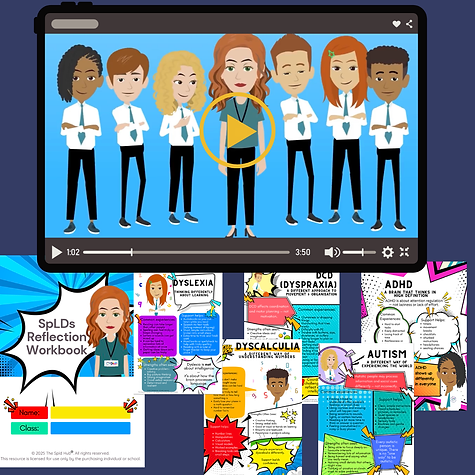
Everything you need to open positive, age-appropriate conversations about different ways of thinking and learning.
Help pupils understand why people think, learn and experience the world differently with a ready-to-use school resource pack covering dyslexia, dyscalculia, ADHD, autism and DCD (dyspraxia).
The pack combines a professionally produced animated assembly with a pupil reflection workbook and five printable classroom posters, giving staff a simple way to start positive, age-appropriate conversations about neurodiversity and learning differences.
WHAT'S INCLUDED

ANIMATED VIDEO

PUPIL WORKBOOK

CLASSROOM POSTERS
No assembly to write. No activities to plan. No posters to create.
The resources are designed to work together, so schools can introduce key ideas through the animated video and then continue the conversation in classrooms, assemblies, form or tutor time, or PSHE.
-
9-minute animated video - introduces different ways of thinking and learning in an accessible, engaging format.
-
20-page pupil activity workbook - includes reflection, discussion, practical strategies and interactive challenges.
-
Five printable classroom posters - one each for dyslexia, dyscalculia, ADHD, autism and DCD (dyspraxia).
SEE THE RESOURCE IN ACTION
Watch a short preview of our professionally produced animated awareness video, created for pupils in KS2 and early KS3.
The full 9-minute video explores dyslexia, dyscalculia, ADHD, autism and DCD (dyspraxia) and can be used in assemblies, PSHE, form or tutor time, SEND and inclusion activities.
FIVE AREAS EXPLORED


Understanding differences strengths challenges practical support
The resource introduces dyslexia, dyscalculia, ADHD, autism and DCD (dyspraxia). It emphasises that every person is different and balances possible challenges with strengths, practical support and understanding.
Pupils are encouraged to understand that differences in learning, attention, communication, sensory experience or coordination do not reflect intelligence, effort or potential. Activities help pupils think about what everyday experiences can feel like for other people, identify supportive strategies and consider how they can contribute to a kinder, more inclusive school community.
ENGAGING FOLLOW-UP ACTIVITIES


Reflection Discussion Practical Strategies
The pack is designed for pupils in Key Stage 2 and early Key Stage 3. Schools can use it for whole-school or year-group assemblies, PSHE, form time, SEND and inclusion work, transition activities, Dyslexia Awareness Week and Neurodiversity Celebration Week.
PRINTABLE CLASSROOM POSTERS
DISPLAY AROUND SCHOOL TO REINFORCE AWARENESS AND INCLUSION
3-STEP APPROACH
Watch - Use the animated video to introduce the main ideas.
Explore - Choose workbook activities for class, form time or follow-up discussion.
Reinforce - Display the posters around school to keep the messages visible.
Individual licence £25. For an individual educator or practitioner using the complete pack in their own work.
Whole-school licence £49. For use by staff and pupils within one purchasing school. Staff can show the animated video, print pupil workbooks, display the posters and share the files securely within the school in line with the licence terms.
The SpLD Hub provides specialist support, assessment information and practical resources relating to specific learning differences. This resource has been designed to help schools introduce neurodiversity and learning differences in a clear, positive and age-appropriate way, with practical follow-up activities that support discussion and reflection.