
So… What Is DCD (dyspraxia)?

Updated: Aug 11
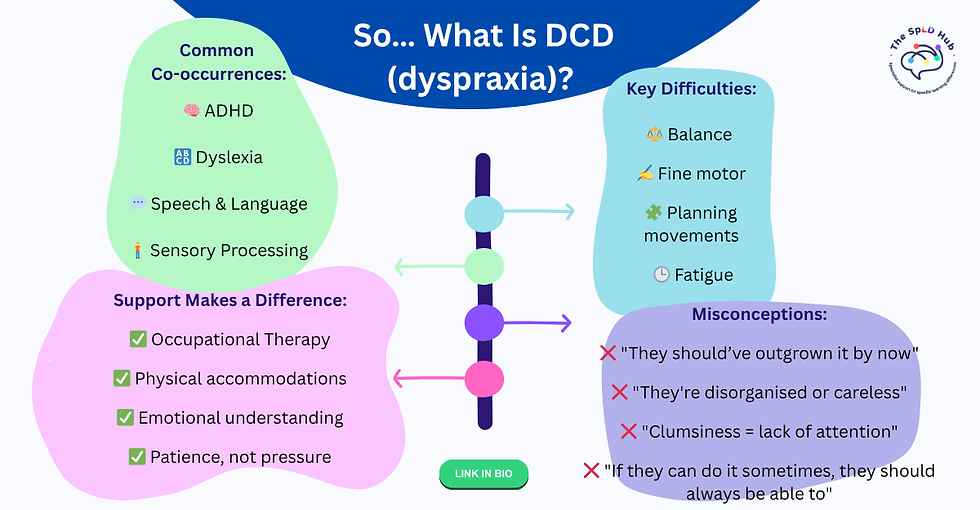
Dyspraxia — also known as Developmental Coordination Disorder (DCD) — affects movement, coordination, and sometimes planning and organisation. But it’s more than just being “clumsy” or having poor handwriting. For both children and adults, dyspraxia can impact everyday life in subtle and surprising ways.
Let’s unpack what dyspraxia is, how it presents across ages and stages, and how the right support can make a lasting difference.
🧠 What Is Dyspraxia / DCD?
Dyspraxia is a neurodevelopmental condition that affects motor coordination, planning of movements, and often impacts other skills like organisation, speech, and memory.
In the UK, the medical term Developmental Coordination Disorder (DCD) is often used interchangeably with dyspraxia, though DCD is the diagnostic term used by clinicians.
According to the Dyspraxia Foundation and NHS guidance, DCD is not related to intelligence, but it can affect learning and confidence, especially if misunderstood.
How It Looks at Different Ages 👶👧🧑🎓🧑💼
In Young Children:
Delayed milestones (e.g., crawling, walking, getting dressed)
Difficulty holding cutlery, using scissors, or gripping pencils ✏️
Challenges with running, jumping, catching, or balance ⚽
Fatigue from physical tasks
In School-Aged Children:
Messy handwriting or slow writing speed ✍️
Trouble copying from the board
Avoidance of PE or physical games
Difficulty keeping up with classroom tasks
Seeming disorganised or always losing things 🎒
In Teenagers and Adults:
Difficulty with time management and planning 🕒
Challenges learning to drive or riding a bike 🚲
Awkwardness in social situations due to poor body language or coordination
Struggles with DIY, multitasking, or workplace admin tasks
Fatigue or frustration with everyday tasks that require coordination
Dyspraxia often co-occurs with other neurodivergent profiles like dyslexia, ADHD, or autistic spectrum traits, which may mask or complicate its presentation.
It’s Not Just About Movement
While motor coordination is central to dyspraxia, it can also affect:
Sequencing and organisation (e.g., following steps, remembering instructions) 🧩
Speech and language (e.g., unclear articulation, difficulty with tone or timing) 💬
Memory and concentration, especially under pressure
Emotional regulation, especially when overwhelmed or misunderstood 😟
These secondary impacts can affect self-esteem, participation, and mental wellbeing — making understanding and support essential.
Strengths Often Found in People with Dyspraxia
Despite the challenges, many people with dyspraxia show strengths such as:
Creativity and originality 🎨
Persistence and resilience 💪
Problem-solving from a different angle 🔍
Empathy and sensitivity 🤝
Determination to overcome barriers 🌱
Dyspraxia doesn’t affect intelligence — but a mismatch between ability and execution can sometimes make it feel that way, especially without support.
✅ Support That Makes a Difference
With the right adjustments, learners and professionals with dyspraxia can thrive.
Some helpful strategies include:
Use of assistive tools like pencil grips, speech-to-text, or keyboards 🖥️
Extra time for processing or physical tasks ⏳
Chunking instructions and using visual reminders 📋
Structured routines and clear expectations
Encouragement to develop self-esteem and celebrate effort 🎉
In schools, reasonable adjustments under the Equality Act (2010) can help learners access the curriculum. In the workplace, Access to Work may provide equipment or support funding.
🔍 Screening, Assessment & Support
While there’s no single test for dyspraxia, signs can be explored through developmental history, observation, and functional assessments.
Paediatricians, occupational therapists (OTs), or educational psychologists may carry out formal assessments for DCD.
For adults, referrals can be made through a GP or private specialist with experience in adult DCD.
I offer screening appointments that can help identify dyspraxic traits and suggest whether onward referral may be helpful.
📌 Please note: A formal diagnosis of DCD must be made by a qualified medical or allied health professional.
Understanding Dyspraxia Builds Empathy
Dyspraxia is more than clumsiness or slow handwriting — it's a hidden difference that affects daily life, learning, and confidence. But with the right recognition and tools, people with dyspraxia can thrive in their own way.
If this sounds familiar — for you, your child, or a learner you support — you're not alone, and there are ways forward.


